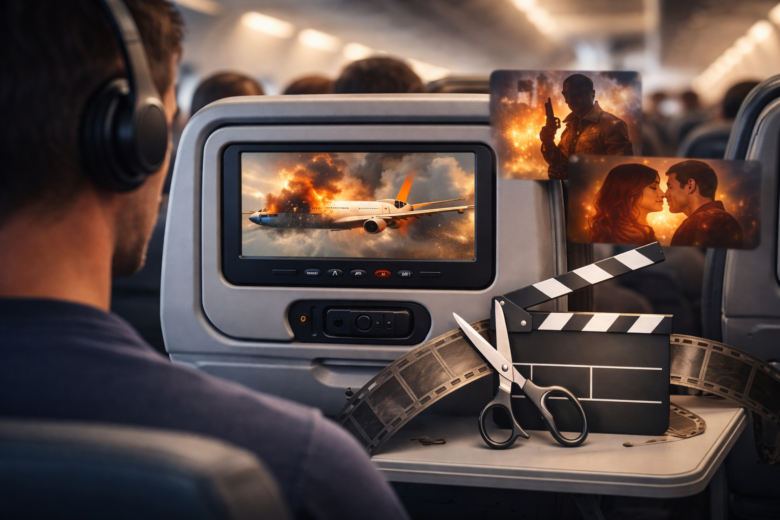
Watching a movie on a plane can feel like a small escape during a long flight. Many passengers use in-flight entertainment to relax, pass time, or enjoy the latest films while traveling. However, something interesting often happens with movies shown on airplanes: they are sometimes edited differently from the versions people see in theaters or on streaming platforms.
These changes may seem surprising at first. After all, a movie is usually released with a specific story, tone, and visual style. Yet airlines frequently adjust certain scenes before showing the film to passengers.
Understanding why airlines do this reveals a lot about how entertainment adapts to unique environments and audiences.
The Unique Environment of Air Travel
Airplanes create a very different viewing environment compared to cinemas or living rooms. Hundreds of passengers sit together in a confined space. People of different ages, cultures, and sensitivities share the same cabin.
Because of this, airlines must be careful about the type of content they show during flights.
Scenes involving extreme violence, strong language, or explicit material may make some passengers uncomfortable. Unlike watching a film at home, passengers cannot easily avoid seeing or hearing the content around them.
To maintain a pleasant atmosphere for everyone on board, airlines often choose edited versions of certain films.
Sensitivity to Flight-Related Scenes
One of the most common reasons for editing movies on airplanes involves scenes related to aviation or disasters.
Films that show plane crashes, hijackings, or emergency landings may feel unsettling for passengers during a flight. Even if the scene is fictional, it can create unnecessary anxiety in an already stressful environment.
Because of this, airlines sometimes remove or shorten scenes that include:
- aircraft accidents
- turbulence disasters
- plane hijackings
- airport security incidents
These edits help avoid situations that could make passengers nervous while flying.
Cultural Diversity Among Passengers
Airlines serve passengers from many different countries and cultural backgrounds. What one audience considers normal entertainment might feel inappropriate to another.
People travel for many reasons. Some passengers travel for work, others for tourism, and many travel with their families. Because of this variety, airlines must consider a wide range of cultural expectations when selecting entertainment content.
In many cultures, certain scenes in movies may be considered offensive or uncomfortable. For example, strong language, graphic violence, or explicit sexual scenes may not be suitable for all audiences.
Because of this diversity, airlines often choose content that works well for a global audience.
Scenes involving strong profanity, graphic violence, or explicit sexual content may be edited or softened. The goal is not to change the story entirely but to ensure that the film remains suitable for a wide range of viewers.
Airlines also try to avoid scenes that may conflict with cultural or religious values. Some passengers may feel uncomfortable watching certain types of content while sitting near strangers during a long flight.
This careful selection process helps airlines maintain a respectful and comfortable atmosphere inside the aircraft.
Ultimately, this approach helps airlines create an environment where families, children, and international travelers can enjoy entertainment without discomfort.
Time Constraints During Flights
Another practical reason for editing movies relates to flight schedules.
Not every flight lasts long enough to show a full movie. Short flights may only allow passengers to watch a portion of a film before the aircraft begins its descent.
To solve this issue, airlines sometimes shorten films slightly so they fit within the available viewing time.
Editors may trim minor scenes, extended dialogue, or slower pacing moments. These adjustments help maintain the film’s overall storyline while reducing the total runtime.
In many cases, the removed scenes are not essential to the main narrative. Editors focus on preserving the core plot and important character moments.
These changes help the film run smoothly within the flight’s entertainment schedule.
Passengers can still enjoy the main storyline while finishing the movie before the aircraft begins landing procedures.
This approach also helps avoid situations where passengers become deeply involved in a film but cannot see the ending before the flight ends.
By adjusting movie lengths, airlines create a more satisfying viewing experience during travel.
Airline Content Policies
Many airlines have their own internal guidelines about the type of entertainment they provide.
These policies often focus on creating a respectful and comfortable environment for passengers of all ages.
Airline companies invest significant effort into maintaining a positive passenger experience. Entertainment plays an important role in that experience, especially on long flights.
Because of this, airlines carefully evaluate the movies included in their entertainment systems.
For example, some airlines avoid scenes involving:
- extreme violence
- sexual content
- heavy drug use
- offensive language
Content managers review films carefully before adding them to the airline’s entertainment library.
These professionals analyze each film and decide whether certain scenes should be edited or removed. Their goal is to create an entertainment catalog that appeals to the widest possible audience.
If a movie contains sensitive scenes, editors may adjust the film slightly to align with airline policies.
In some cases, airlines may choose not to include a movie at all if the content does not match their guidelines.
The Role of Film Distributors
Airlines rarely edit movies entirely on their own. Instead, film distributors often provide special versions designed specifically for in-flight entertainment.
These versions are sometimes called airline edits.
Film studios and distributors understand that airlines operate in a unique environment. As a result, they often prepare alternative versions of movies that remove sensitive scenes while preserving the main storyline.
Studios and distributors work closely with airlines to create versions that remain coherent and enjoyable.
This collaboration ensures that the film still delivers a satisfying viewing experience, even with small adjustments.
Some directors even approve these edits in advance when they know the film will appear on international flights.
In other cases, distributors provide multiple versions of the same film so airlines can choose the most appropriate option for their passengers.
This cooperation between studios and airlines helps maintain the quality of the entertainment offered during flights.
Passenger Expectations and Comfort
Airlines prioritize passenger comfort in every aspect of the travel experience, including entertainment.
Flying can sometimes feel stressful or tiring, especially on long journeys. Entertainment helps passengers relax and pass the time more easily.
Because of this, airlines try to provide movies that create a calm and enjoyable atmosphere.
Many travelers simply want light, relaxing content during a flight. They may prefer comedies, family films, or adventure stories rather than intense dramas.
Movies that feel uplifting or entertaining often work better in the airplane environment.
Because of this preference, airlines often choose movies that feel entertaining without creating stress or discomfort.
When necessary, editors adjust certain scenes so the movie better fits the relaxed environment of air travel.
These adjustments help ensure that passengers can enjoy their entertainment without feeling uneasy or distracted.
The Growth of In-Flight Entertainment
In-flight entertainment has evolved dramatically over the past few decades.
In the early days of commercial aviation, passengers had very limited entertainment options. Some flights showed a single movie on a shared screen, while others offered no entertainment at all.
Today, the experience is very different.
Modern aircraft often include individual screens for every passenger. These systems provide access to a wide variety of entertainment options.
Passengers can watch movies, television series, documentaries, and music programs during their journey.
Many airlines now offer hundreds of entertainment choices, allowing travelers to select content based on their personal preferences.
Major streaming and entertainment companies such as Netflix, Disney, and Warner Bros. frequently license content for airline entertainment systems.
Even with this wider selection, airlines still review films carefully before including them in their catalogs.
This review process helps ensure that all entertainment content fits the airline’s guidelines and passenger expectations.
Do These Edits Change the Story?
In most cases, airline edits remain relatively small.
Editors usually remove only a few seconds or minutes of content from the original film.
The main storyline, characters, and overall message of the movie normally remain unchanged.
However, viewers who compare the airline version with the original theatrical release may notice some differences.
For example, certain dialogue lines may disappear, or a short scene may be shortened or removed.
These changes rarely affect the overall experience, but they highlight how media sometimes adapts to different environments.
Most passengers do not even notice these adjustments during the flight.
The goal of these edits is not to change the movie’s message but to ensure that it fits comfortably within the airline setting.
The Balance Between Entertainment and Responsibility
Airlines face a unique challenge when offering entertainment to passengers.
They want to provide engaging content that keeps travelers entertained during long flights. At the same time, they must consider passenger comfort, cultural diversity, and safety concerns.
Entertainment choices can influence the atmosphere inside the aircraft.
A film with extremely intense scenes could create tension or discomfort among passengers.
Editing certain movies allows airlines to balance these goals.
By adjusting specific scenes, they can offer popular films while maintaining a calm and respectful atmosphere inside the aircraft.
This balance helps ensure that the entertainment experience remains enjoyable for everyone on board.
Movies shown on airplanes often look slightly different from the versions people see in theaters or on streaming platforms.
Airlines edit films for several reasons, including passenger comfort, cultural sensitivity, time limitations, and aviation-related content.
These changes may seem unusual at first, but they reflect the unique environment of air travel.
Airplanes bring together people from many cultures, ages, and backgrounds. Because of this, airlines must carefully choose entertainment that works well for everyone.
In the end, airline edits show how entertainment adapts to different settings.
While the story usually stays the same, small adjustments help ensure that every passenger can enjoy the movie during their journey.